The Cajon is a very simple yet amazing percussion and it is widely used all over the world in almost every style of music.
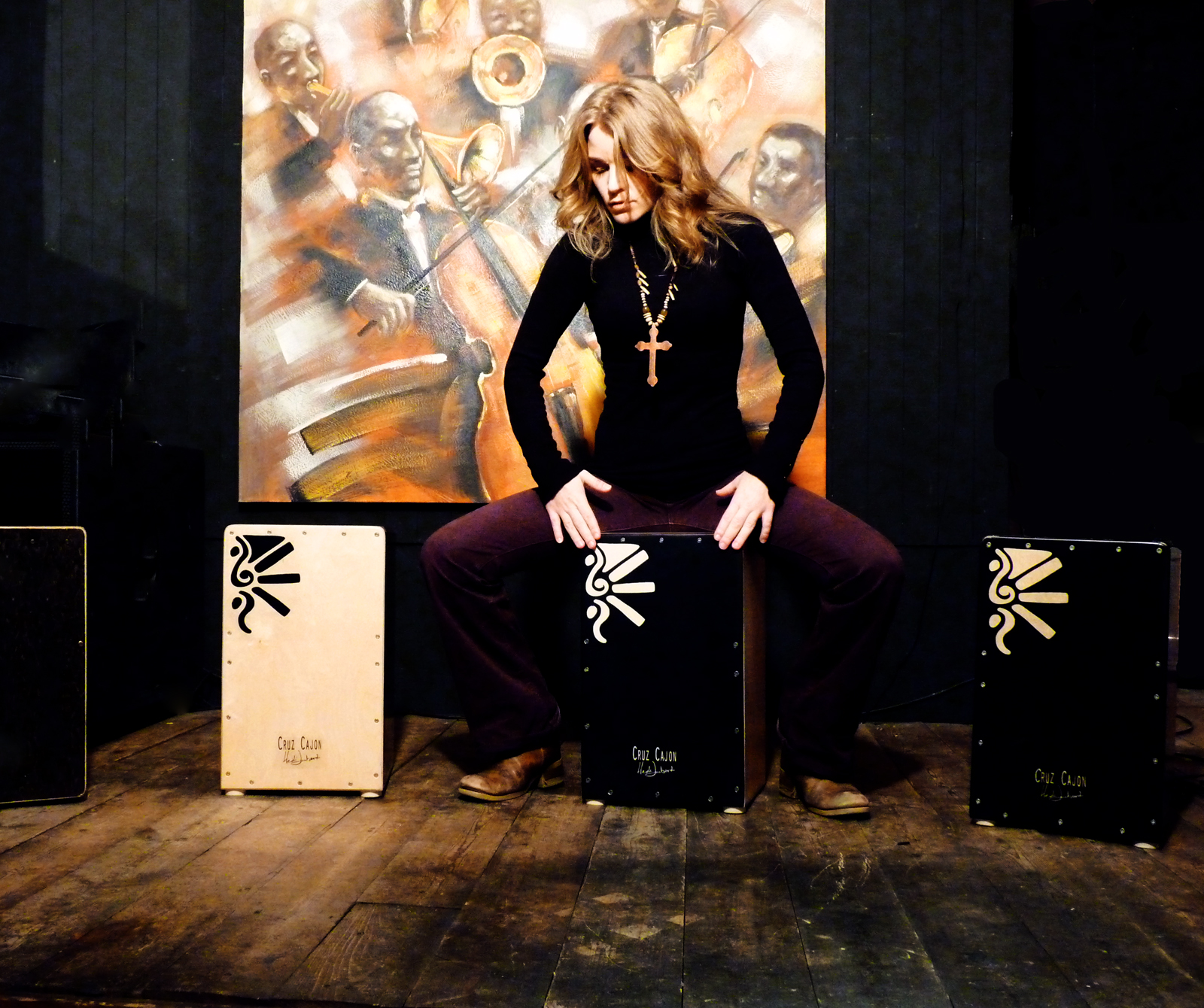
The cajon is a box drum played with the hands, fingers and brushes. It can also be played with your feet or really any object.
The Cajon is sat upon and played upon the face (front panel) of the box with your hands and fingers. You can also get different tones and notes out of a cajon by applying pressure to the front panel (face) with the heel of your foot or your hands whilst striking it with the other hand.
Due to the amazing range of sounds and the different timbres, It is many times referred to as a drum kit in a box and is used as such in modern music.
Cajon means Drawer or box in Spanish. It originates from Peru where it is used in their folk music in styles such as Festejo. Legend has it that the Arican slaves in Peru started playing their grooves on the fishing and packing boxes where they worked when their “owners” banned their African drums. The Peruvian cajon then found its way to the loving hands of Paco De Luciai’s percussionist’s hands where he developed the guitar string system to creat a more snary airy sound for the cajon. Hence the Flamenco cajon was born.
It is the Flamenco cajon that became famous and is now being used in contemporary music, largely due to the fact that the sound resembled that of a drum kit closely. The peruvian cajon has no strings and has a very different sound and playing technique to it.
The cajon is any percussionists or drummers dream! No hassle with loads of drums and equipment, just a box with an amazing sound, and loud enough to be used accoustic, even in concert!
Heidi,
Greetings from a new fan. I was born into a family of music and all things entertaining, and found myself naturally gravitating toward the natural sounds and rythmic beats of percussion and thanks to my very loving father who helped me believe, and always encouraged me to push myself beyond my comfort zone which is how I overcame my fear of failure, and the difficulty of having extremely small hands/fingers my weaknesses to decently pick and strum acoustic guitar
Hello Heidi,
I am a self-educated djembé player and I discovered by chance this wonderfull instrument.
Il realy enjoy by playing percussion.
I saw your lessons videos on youtube and I realy liked them.
So I decided to become a cajon player.
And as I make wooden furniture, I decided to build myself my cajon.
The varnish is now dry and I’m a hurry to play tonight with my choir.
I want to thank you for your great videos.
Saludos Heidi,
I am starting to play Djembe and now looking into buying a cajon from you here in the USA. It will be expensive but if the sound is what I hear in your videos I am in.I have tried alot of cajones at stores and they are cheaply made (warped wood or not constructed well with a bad snare sound.
I am going to revolutionize my own cajon sound and style of playing.I can feel it. I hope the quality is what I think it will be and … see you out there in cajon world!
Ole! Kick some butt!
Hei, I’m Iwan from Indonesia, what is the different between the trapezoidal cajon and the plain box cajon? thanks
Hello Iwan! Aku dari Malaysia. Trapezoid Cajons are played on the top of the drum, like a Conga(not Conga strokes, just played like one). You do not get to sit on the drum like a normal Cajon. Most of them have no strings, so they sound like a Peruvian. Hope I helped.
I’m brasilian cojonist Nd i will Be in London from 3 to 7 of november and i would like to have a lesson with you, is that possible ?
How muth is it ? Do you have a telefone number to talo to you?
Thks for all!
Hallo Heidi. I was recently given a Cajon as a gift and have found your onnlie videos very helpful in learning to play thank you for your generosity in providing them and for sharing your talent! I hope soon to be busking with a friend who plays guitar, and would like to add a small cymbal like the one you are using on the video in Liverpool station. Does this have a particular name, and is it something that regular music shops stock? Or can you suggest an onnlie supplier? Finally do you have any plans to perform in South Wales where I live (or somewhere near)? I would love to hear Fernandos Kitchen live. Cheers Les.
Hello!
i use many different cymbals, and have just today talked with a distribution company to sell cymbals in our online store! I would say a good one to start with is the Stagg 8 inch splash, it’s cheap too!!!
Good luck with the busking, please send me some vids whne you do have some up, I would love to see it!
Heidi